Attendees invested one day in navigating the next phase of clinical coding.
This focused, one-day, face-to-face forum brought together NHS clinical coding professionals to gain practical insight, fresh perspectives and real-world learning to help them navigate the evolving clinical coding landscape with confidence. Participants shared proven approaches, lessons learned and strategies that could be applied immediately within their own services.
Previous attendees consistently highlighted the value of this annual conference for its practical relevance, knowledgeable speakers and opportunities to connect with peers facing similar challenges. Through expert presentations, shared NHS experience, interactive discussion and networking, attendees left with a clearer understanding of ICD-11 and OPCS-4.11, stronger approaches to workforce and hybrid working challenges, improved knowledge of data quality for decision-making, and a realistic view of how AI is shaping coding services in practice.
Sponsored by CHKS, Heidi Health & Pharma Direct




Expand your knowledge
Network and share experience
With thanks to the sponsors
SBK would like that thank CHKS, Heidi Health and Pharma Direct for sponsoring this Clinical Coding forum.


| 8:30 |
Registration and networking opportunity
|
| 9:00 |
Introduction, instructions and chair’s opening remarks
Sue Eve-Jones, Clinical Coding Specialist, Trainer and Auditor
|
| Navigating the next phase of clinical coding | |
| 9:10 |
Reflecting on the impact of OPCS-4.11: early experience of electronic classifications
Emma Ho, Clinical Coding Manager, Rotherham NHS Foundation Trust
|
| 9:40 |
Questions and answers with your speaker
|
| 9:50 |
Roundtable discussion: Are you ready for classification change?
|
| 10:10 |
From Consultation to Code: Why AI Scribes Matter for Clinical Coders
Harry Sanham, Clinical Coding Specialist, Heidi Health
|
| 10:20 |
Questions and answers with Harry Sanham
|
| 10:25 |
Refreshments and networking break
|
| Education and assessment in electronic classifications | |
| 10:45 |
IHRIM update: education, assessment and curriculum developments
Laura Terry, Associate Director of Education (Clinical Coding), Institute of Health Records & Information Management (IHRIM)
|
| 11:05 |
Questions and answers with your speaker
|
| 11:15 |
Roundtable discussion: Preparing for assessment, curriculum and training changes in an electronic classifications environment
|
| Supporting the clinical coding workforce | |
| 11:35 |
Addressing retention and workforce resilience in clinical coding
Chris Hill, Clinical Coding Service Manager, Doncaster and Bassetlaw NHS Teaching Hospitals NHS Foundation Trust
|
| 12:05 |
Questions and answers with your speaker
|
| 12:15 |
Roundtable discussion: What are your workforce challenges and approaches?
|
| 12:35 |
Refreshments and networking lunch
|
| Understanding AI and automation | |
| 1:35 |
AI and the clinical coder: the human side of implementation
Jen Wilson, Clinical Coding and Data Quality Manager, Liverpool Women’s Hospital, University Hospitals of Liverpool Group
|
| 2:05 |
Assessing the practical reality of AI in clinical coding
Aaron Key, Senior Data Engineer and Technical Lead, The Clatterbridge Cancer Centre NHS Foundation Trust
|
| 2:35 |
Questions and answers with your speakers
|
| 2:45 |
Refreshments and networking break
|
| 3:05 |
Roundtable discussion: Benchmarking the impact of AI in clinical coding services
|
| Recognising the importance of data quality | |
| 3:25 |
Strengthening data quality and comparative analysis in clinical coding
Sue Eve-Jones, Clinical Coding Specialist, Trainer and Auditor
|
| 3:55 |
Questions and answers with your speaker
|
| 4:05 |
Chair’s closing remarks
|
| 4:15 |
Close of conference
|
With thanks to the speakers
Sue is a specialist with over 35 years of experience in training, audit, standard setting, classification authoring, mapping, organisational change, mortality data review, data analysis and research. She has worked at hospital, regional and national level and in the commercial sector in the UK and overseas. NHS roles have included Head of Clinical Coding and Data Quality at the Taunton and Somerset NHS Foundation Trust and Head of Clinical Coding at the East and North Herts NHS Trust and Dorset County Hospitals NHS Foundation Trust. Sue is currently a Clinical Coding Lead for GIRFT, works with Jigsaw Medical and is an independent coding specialist, trainer and auditor.
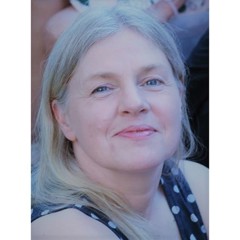
Chris Hill works as a Clinical Coding Service Manager at Doncaster and Bassetlaw Teaching Hospitals NHS Foundation Trust and has been in his current post for the last 1.5 years. He brings 22 years of NHS service, including 17 years of experience within Clinical Coding. Prior to his current role, he worked as a Clinical Coding Manager at Leeds Teaching Hospitals NHS Trust. Chris is married with two children and is dedicated to supporting high standards within clinical coding services. He is particularly passionate about leading transformational projects that promote staff wellbeing, drawing on his extensive experience across the field.
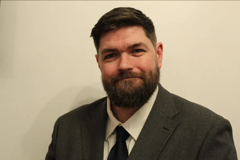
Emma Ho is the Clinical Coding Manager at The Rotherham NHS Foundation Trust with more than 15 years of clinical coding experience. As an approved Clinical Coding Trainer, she is passionate about developing the next generation of coders and readying the current workforce for the digital future. Using a collaborative approach to digital transformation with clinical, operational and informatics teams, she has led projects on clinical terminology optimisation for SNOMED integration in EPR workstreams, documentation optimisation for clinical coding quality, and AI and automated clinical coding.

Jen Wilson is Clinical Coding & Data Quality Manager at Liverpool Women’s Hospital, with 15+ years of clinical coding experience. She champions practical, collaborative AI and automation solutions that streamline workflows, enhance services, and improve staff experience. Jen’s innovative, grassroots approach shows how technology can relieve everyday pressures and build future-ready skills. She is committed to digital capability and workforce development, empowering colleagues to confidently adopt new tools, and uniting professionals across disciplines to tackle real-world challenges.
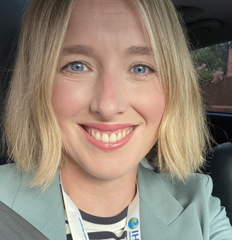
About 6 years ago, I was a typical uni drop out KFC worker, and then I landed a position as a Level 4 Data Analyst Apprentice at CCC at a temporary Band 2 equivalent. I quickly established myself as a capable member of the team, landing a permanent Band 3 BI Assistant. After completing my apprenticeship and supporting in a number of projects, including a redesign of our Integrated Performance Report, I succeeded in getting a Band 5 position where I started developing an interest into Data Science. Not long after, I started a Level 6 BSc Hons Data Scientist Apprenticeship, where I learned skills around Machine Learning, AI and Automation. After a year of my apprenticeship I was successful in landing a Band 6 Data Engineer position, and then a year later, I was given an opportunity to manage the Development team for BI. Key projects I worked on during my Data Science Apprenticeship include predictive models for appointment non-attendance, inpatient Length of Stay and Emergency Admission Risk in Cancer patients across Cheshire and Merseyside.
During recent investigations for our trust in AI, I positioned myself as a subject matter expert for Machine Learning processes, where I advised on ethical adoption of new AI technology, and how we can use AI to augment workflows. A key project in this space is the automation of Radiology Clinical Coding, which I'm excited to present at the conference.
Laura has been coding for 8+ years, is a trainer and team manager at Sheffield Children’s Hospital and has been Associate Director of Education for IHRIM for just under a year. Prior to coding she handled 999 calls for the police and ambulance services.

Who came?
Past attendee feedback
“Incredibly valuable - reassuring to share insights and see others facing similar challenges”
Liverpool Women’s NHS Foundation Trust, National Clinical Coding Roadmap, April, 2025
“I gained a good insight into the future of clinical coding and the challenges ahead”
University Hospitals of Northamptonshire NHS Group, National Clinical Coding Roadmap, April, 2025
“I really enjoyed networking and sharing ideas and challenges with the coding community”
Royal Devon University Healthcare NHS Foundation Trust, National Clinical Coding Roadmap, April, 2025
“It’s been a very useful and informative day and taken lots of information away to use within our Trust services”
The Dudley Group NHS Foundation Trust, Clinical Coding Roadmap 2024, June, 2024
“Informative, interesting, addressing contemporary issues and a great chance to talk to others”
Maidstone & Tunbridge Wells NHS Trust, Clinical Coding Roadmap 2024, June, 2024
“Really useful information and an insight into the future”
Royal Berkshire NHS Foundation Trust, Clinical Coding Roadmap 2024, June, 2024
“Very well-organised event. Good speakers. Lots of information and knowledge to take home”
University Hospitals of Leicester NHS Trust, Clinical Coding Roadmap 2024, June, 2024
Sponsors

CHKS are the UK's largest independent provider of healthcare clinical coding services, offering AI and remote coding, training, and support. Our focus is delivering accurate, scalable and efficient coding for excellent data quality and reliable, timely results.

Heidi Health is a clinical AI company whose AI scribe captures and structures clinician encounters in real time. We're building AI-assisted clinical coding tools that use this structured output to improve the speed, accuracy, and completeness of downstream coding.
Pharma Direct specialise in the recruitment of Clinical Coding professional across the UK, professionals are supplied on a contract, fixed term or permanent basis to all manner of public and private sector companies. Click here to view their website.
Why sponsor?
Your event, managed by us
SBK Healthcare also provides in-house forums. Working closely with you as the client we can research, produce, market and deliver the conference or online forum that best suits the audience and meets your goals.
Reach out today
Thank you for attending an event by SBK Healthcare. We are pleased to offer you on-line access to the documentation that you received at the event. This is an exclusive benefit for all of the attendees and includes additional and updated documentation.